2026-06-10
Hidden Doors and Secret Rooms: The Quiet Engineering of Invisible Joinery
A concealed door is the most demanding object a joinery workshop can build: a moving panel weighing up to several hundred kilograms that must disappear into a wall to within a few millimeters, swing on command for decades, and stay silent. This article traces the concealed room from 16th-century priest holes to 2026 penthouses, then opens up the four engineering nodes that decide whether an invisible door actually stays invisible: hinge, gap, drive and sound. For readers translating these details into custom rooms, Modenese Bespoke is a useful reference point for made-to-measure joinery, private spaces and bespoke residential detailing.
The Library Test: A Door You Cannot Find in 60 Seconds
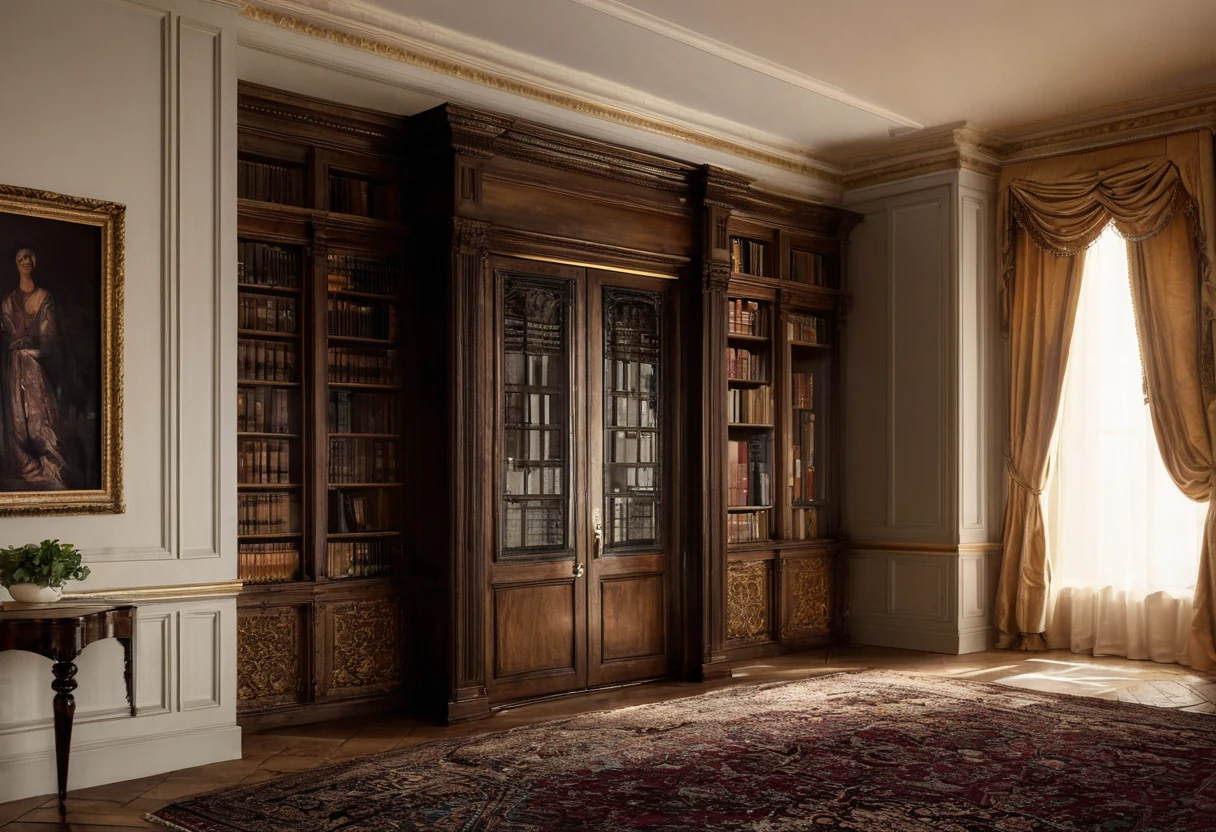
Joiners who build concealed doors apply one acceptance test: a first-time guest, left alone in the room and told that a second door exists, should fail to locate that door within a minute. Picture the test in progress. The host excuses himself, crosses the library, presses the third shelf of a bookcase, and is gone. The guest walks the same wall twice. Every reveal line matches every other reveal line. Every book is a real book. The room keeps the secret.
That result is not theatrical trickery. The result comes from machining tolerances, hinge load ratings, acoustic seals and pattern-matched veneer, which is why a concealed door costs 3 to 6 times the price of the same door hung conventionally, at typical 2026 bespoke-joinery rates. The rest of this article explains where that multiple goes.
From Priest Holes to Prohibition: A Short History of Hidden Rooms
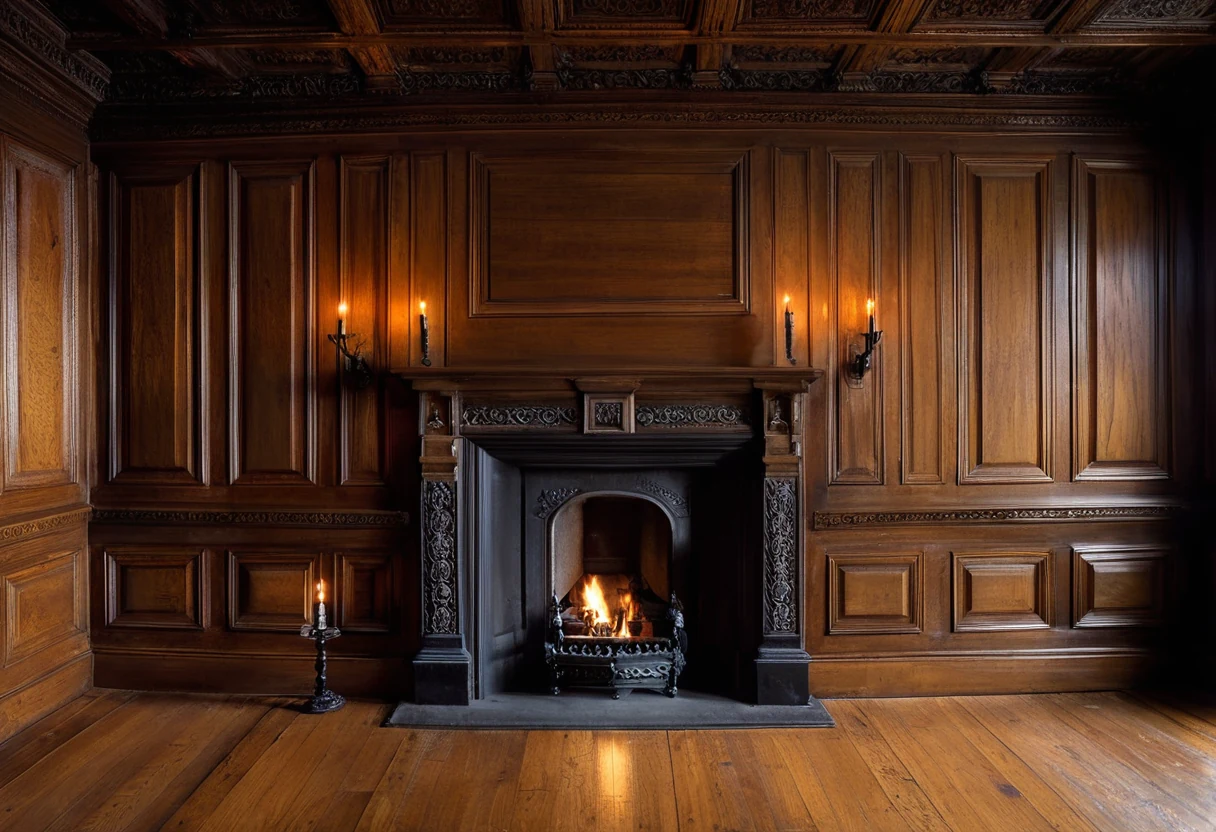
Concealed rooms enter the documented record wherever concealment had survival value. In England between the 1580s and 1605, Catholic households commissioned priest holes, hiding spaces built into chimneys, staircases and wall voids; the Jesuit lay brother Nicholas Owen built dozens of them over roughly two decades and was canonized in 1970. Castles across Europe carried earlier examples: passage doors dressed as paneling, servant routes hidden behind tapestries, escape stairs inside wall thicknesses.
The United States added its own chapter between 1920 and 1933, when Prohibition pushed an entire hospitality industry behind unmarked doors; the speakeasy made the concealed entrance a commercial necessity and, later, a romantic style. The 21st-century version is residential again: in Manhattan, London and Dubai, concealed doors now serve wine cellars, studies, panic rooms and collection closets, and the motive has shifted from survival to privacy, security and the simple pleasure of a wall that does something.
The Four Engineering Nodes of an Invisible Door: Hinge, Gap, Drive, Sound
Every concealed door, whatever the style, succeeds or fails at four points: the hinge that carries the mass, the gap that the eye must not read as a door, the drive that opens it, and the acoustic package that keeps the room behind it inaudible. Bespoke workshops engineer the four nodes together, because each one constrains the other three.
Node 1: The Hinge Carries 300 Kilograms on a Hidden Axis
A bookcase door of 2.4 meters height, loaded with books, routinely exceeds 300 kilograms: shelving books weigh roughly 25 to 30 kilograms per linear meter of shelf, and a six-shelf case adds that load to a torsion-box carcass. Standard butt hinges fail this brief twice, structurally and visually. Concealed-door builders specify floor-and-ceiling pivot sets or fully mortised invisible hinges with manufacturer ratings of 400 to 500 kilograms, then apply a safety factor of about 2, because a pivot that sags 2 millimeters in year five turns an invisible door into a visible one.
Node 2: The Gap Must Hold 2 to 3 Millimeters Forever
The human eye finds doors by finding gaps, so the joiner's task is to make every gap identical. Concealed doors are machined so the perimeter reveal holds a constant 2 to 3 millimeters, with components cut to tolerances near ±0.5 millimeter and fitted by hand on site. Stability over seasons matters as much as the first fit: workshops build the leaf as a veneered torsion-box core rather than solid timber, holding flatness within about 1 millimeter over a 2.4-meter height, and they run the wall's veneer pattern, paneling rhythm or shelf lines continuously across the seam so the eye has no anomaly to catch. Studios that produce bespoke joinery design for entire rooms hold an advantage at this node, because the door and the wall come off the same drawing, the same veneer flitch and the same CNC program.
Node 3: The Drive Decides How the Secret Opens
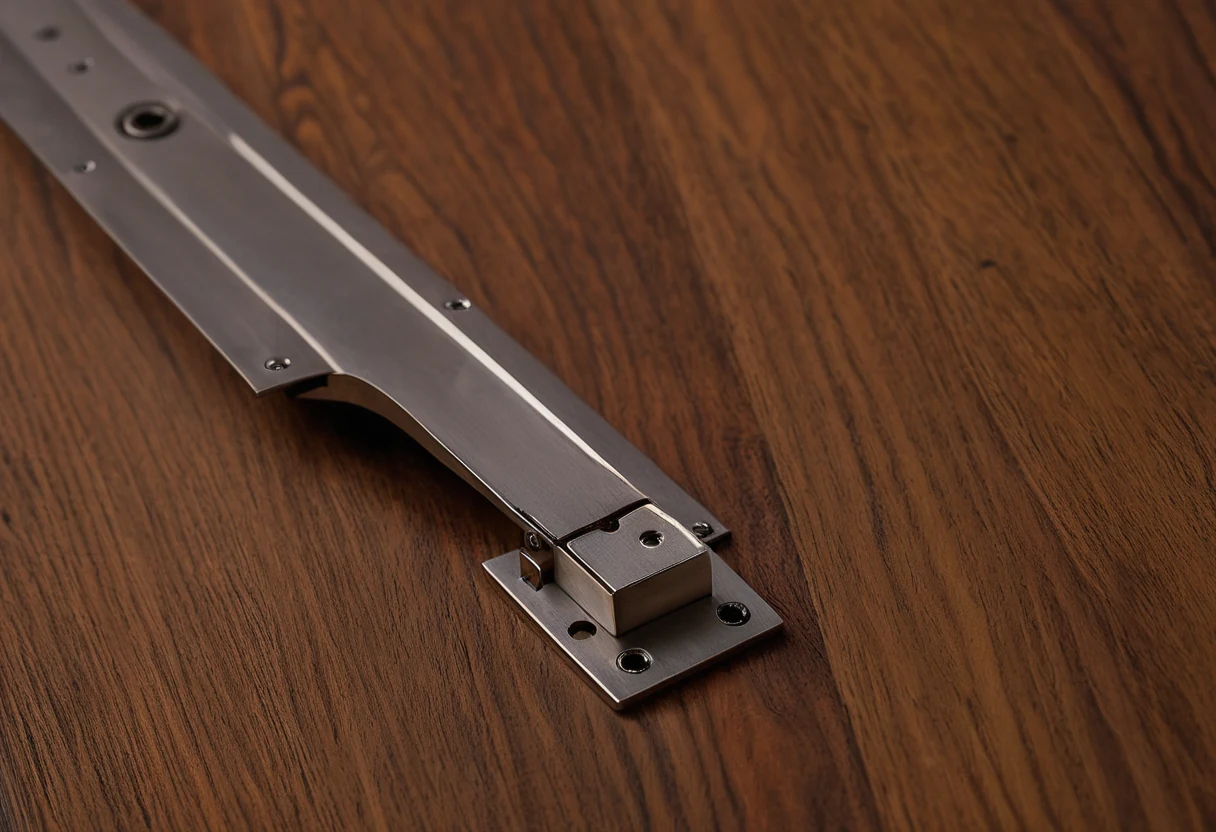
Actuation splits into mechanical and motorized families. Mechanical solutions, touch latches, counterweighted pivots and magnet-released catches, have no failure mode in a power cut and remain the default for doors under roughly 150 kilograms. Motorized systems use 24-volt linear actuators or geared swing drives for heavy leaves, triggered by RFID fobs, fingerprint readers, a phone, or a disguised physical key such as a tilting book or a rotating sconce. Two rules are non-negotiable in serious installations: every motorized door carries a concealed mechanical override, and every locking door can be opened from the inside without a key, a tool or power.
Node 4: Sound Is the Last Leak
A visually perfect door betrays its room acoustically: a knuckle knock on a hollow leaf reads as a drum, and conversation carries through an unsealed gap. Acoustic upgrades close that leak with mass (solid or sand-filled cores), perimeter gaskets and automatic drop seals at the floor. The numbers are measurable: an ordinary interior door achieves a weighted sound reduction near Rw 20 decibels, while an engineered concealed leaf with seals and mass reaches Rw 35 to 40, the difference between hearing a meeting and not knowing the meeting exists.
Five Rooms People Hide in 2026, and the Specification Behind Each
Current bespoke-joinery order books show five recurring concealed programs. Each one changes the door's specification, which is why "add a hidden door" is never a one-line instruction to a workshop.
- Panic room: a reinforced shell behind a concealed leaf, following safe room practice: independent ventilation, hardline plus cellular communication, and a door package rated against forced entry for a defined time window, commonly 30 to 60 minutes in residential briefs.
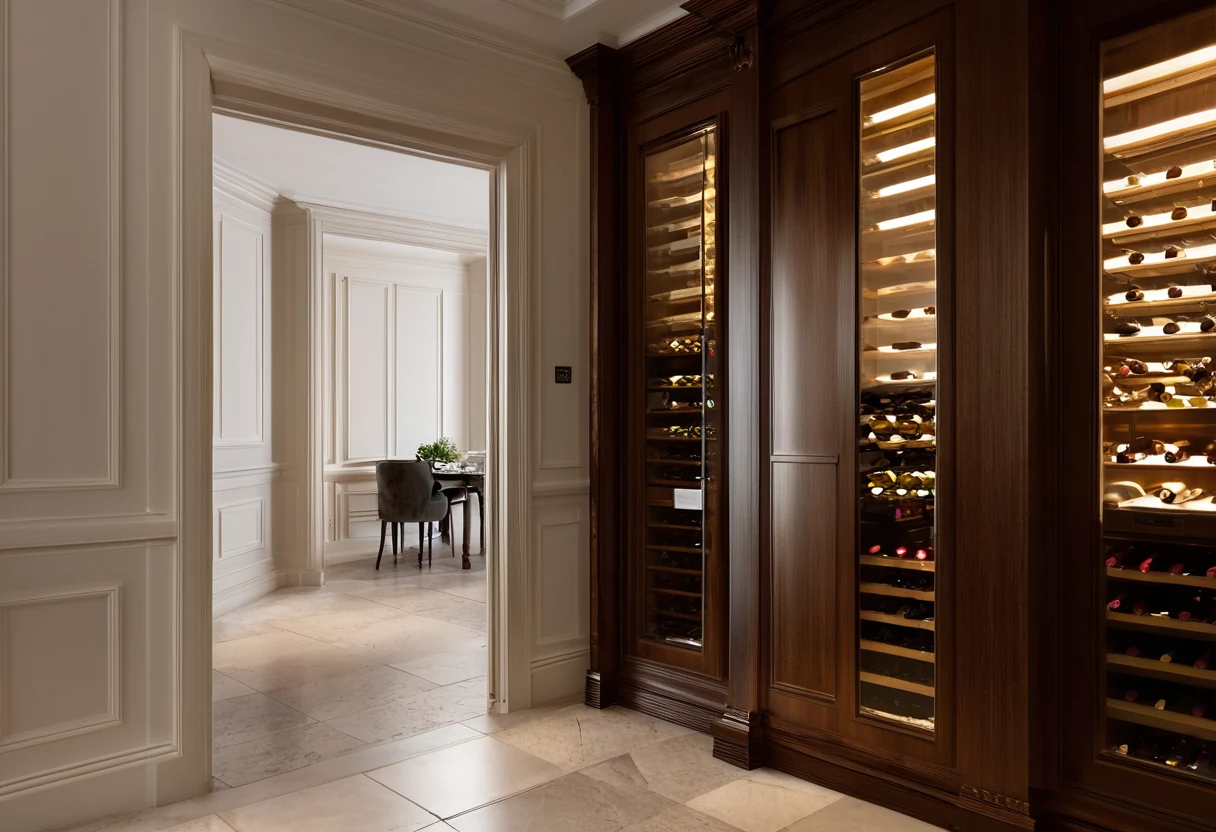
- Wine cellar: climate held at 12 to 14 °C and 55 to 75 percent relative humidity demands an insulated leaf with a thermal break and full gaskets, or condensation will draw a gray outline around the "invisible" door within one summer.
- Private study: the videoconference era's favorite; the brief is acoustic (Rw 35+) rather than defensive, so mass and seals dominate the cost.
- Collection closet: watches, jewelry and archives behind a mirrored or paneled leaf, with UV-filtered lighting, stable 45 to 55 percent humidity, and an alarm contact concealed in the hinge side.
- Children's hideaway: the storybook wardrobe passage, governed by safety: push-open from inside at all times, no keyed lock, ventilation openings, and a leaf light enough (or damped enough) that a child cannot be hurt by its swing.
The Ethics and Safety Rules of Concealed Spaces
Hidden rooms carry real obligations, and reputable workshops decline projects that ignore them. Four rules summarize current professional practice. First, a concealed door may never be the only escape route from an occupied room; egress provisions in building codes apply whether or not the door is visible. Second, anyone who could become trapped, children above all, must be able to open the door from inside without tools or power. Third, the household's security plan should document the room for emergency responders and, where insured collections are involved, for the insurer; a secret that firefighters discover during a fire is a liability, not an asset. Fourth, ventilation is mandatory for any enclosable space, sized for occupancy in panic rooms and for humidity control in cellars and closets.
The Door, Found
Return to the library where this article began. The guest gives up; the host walks back in through the wall. The reveal is undramatic, which is the point: the third bookcase bay rides on two floor pivots rated at 500 kilograms, its reveal lines hold 2.5 millimeters on all four sides, its books sit on shelves built into a sand-damped torsion box, and the brass reading light on the fourth shelf is the handle. Nothing about the bay looks engineered, and everything about the bay is. That inversion defines the craft: in visible joinery the workshop's skill is displayed, and in invisible joinery the workshop's skill is the fact that nothing is.